Już wkrótce “Sztuka rozniecania ognia” po angielsku
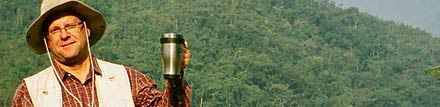
W najbliższych dniach, nakładem wydawnictwa Telkom Media ukaże się angielojęzyczne wydanie książki Romana Warszewskiego “Sztuka rozniecania ognia”. Będzie ono dystrybuowane przez Amazon.com. Książka, w wersji angielskiej, nosi tytuł “Art of Kindling Fire”. Poniżej – poprzedzająca ją przedmowa.
Art of Surprising the Reader
 Roman Warszewski is a writer with an intriguing biography. Yet it is a biography that intrigues in an altogether different fashion than it is the case in the most famous examples of writers' biographies. Because the stages of his life are not marked off by the stations of the suffering of drunk-pounds and all-encompassing hangovers.
No, it's a different story, a different way of life. Roman Warszewski was born in Elbląg in 1959. And he was born with a certain interesting trait. By that I mean a skill of surprising others. The first time he managed to surprise everyone was when he was still a high school student. It happened in mid 1970s when Warszewski deciphered the Rongorongo script from the Easter Island. Specialists from many countries were helpless before the phenomenon of Rongorongo, and a young man from Elbląg (a provincial town, after all) deciphered the mysterious script.
That was Warszewski's first time to surprise everyone. After that it became almost mechanical.
At the beginning of the 1980s he completed his studies at the Department of Foreign Trade at the University of Gdańsk. He decided to make a quick trip to Germany. But the trip that he intended to be short became much longer as – it just so happened – while he was in Germany, a group of generals in Poland decided to declare marshal law. Warszewski decided not to return, at least for the time being. He decided to stay in Germany and take advantage of the opportunity he was given.
But as a temporary emigrant he did not devote his time either to making a fortune or to political activism. He went after what is after all most important for men – he began studies at the Saarland University in Saarbrücken. Moreover, for a Pole in those days, he chose a rather unexpected field. He chose European Integration, which may serve as proof that he succumbed to irrational whims from the days of his youth or mean he showed a rather remarkable intuition. Upon graduating from university in Germany, he worked for a short period of time for the European Commission in Brussels. Then, probably fatigued by the office routine, he went to Florence to defend a PhD dissertation in the same field he had studied. The free travel across Europe did not pose a significant problem as he spoke several languages fluently. German, Spanish, Italian, English, and French. And, though maybe it was not so much needed in Europe, the dialect Quechua from the Sierra of Ecuador. But this tongue was also to come in handy soon. During his studies in Germany he went to South America for the first time. It was supposed to be a simple tourist trip, but apparently Warszewski has something in him that makes his tourist trips to a large degree give direction to his life, change it significantly. And it was the same case this time; it was not a field-trip, it was fate, God's will, karma. Because it was Latin America that became his great fascination, not to say his love. To the extent that most of his later works deal with this region. He brought himself a wife from there too.
In the mid 1980s, to the astonishment of many of his friends, Warszewski returns to Poland. He returns and works as a journalist. He writes for many main Polish magazines (Polityka, Odra, and Literatura, among others). He works for the Gdańsk dailies. You could say that after a few years of an active life he returns to small stabilisation. But you couldn't be more wrong; Warszewski was born with a skill to surprise people. So he surprised them. Surprised everyone with a début book.
The first book and a success right off the bat. Pokażcie mi brzuch terrorystki (Show Me the Belly of a Terrorist) is a short, but fascinating book. It appears to be a reportage about a Maoist ogranization in Peru, the Shining Path. An organization that for many years had waged a sanguinary war with the government. I'm saying it “appears to be a reportage” because while reading, from time to time, we slip into the realm of purest, excellently written prose. And we are not entirely sure, whether we are in the world of reportage or the world of prose. Or perhaps we're simply at the intersection of the genres? It is a book about a specific Maoist female partisan, and at the same time a profound analysis of terrorism as such. It's no wonder that the book sparked great interest and received many awards.
A prominent American expert on the issue of international terrorism John Stirling described the book: “The book is like a razor. It's like an arrow. I think I will not exaggerate, if I say that there are few works that head for their exposing ending with such brutal consistency and so boldly uncover the mechanisms governing violence”. And the excellent reporter Ryszard Kapuściński adds: “it's a reportage on one of the most fascinating phenomenons, written in an excellent, mature and wise way (…). But the greater value of Warszewski's book lies in the fact that it is about not just Peru, but Latin America as a whole, as well as, what is very important, about several phenomenons that trouble the modern world (for example, the phenomenon of terrorism)”. Is it possible to imagine a louder, more interesting, more promising début? After such a début, after reading such reviews of their book, many of my friends go out for vodka and never write another word in their life, being absolutely sure of their extraordinary genius. But not Warszewski.
After several years punctuated with several trips to South America, Roman Warszewski again surprises everyone. He writes (this time together with Grzegorz Rybiński) Vilcacora – the Miracle Cancer Cure. It's a story of a Polish missionary in Peru, a Salesian, Father Edmund Szeliga, who has been studying and popularizing herbs that according to ancient Incas had simply extraordinary healing powers for decades. Among them, the title herb vilcacora (Uncaria tomentosa), which according to Father Szeliga, as well as many medical authorities, is highly useful in treating various serious illnesses, such as cancer.
And once again, a success – this time a considerable success on the market, first of all. It was one of the best selling books at the end of the 1990s in Poland. Its total circulation, not counting translations into foreign languages, reached well over 600 thousand copies. Moreover, it caused a famous discussion in Poland on whether vilcacora truly has the healing qualities ascribed to it by the authors. A small but noisy group of oncologists became the main opponent of the authors. The discussion went through almost the entire Polish press and I suppose really got under the authors' skin. It didn't, however, change the fact that more and more scientific studies seem to confirm the exceptional medical potential of Andean and Amazonian herbs.
Warszewski followed the momentum and wrote, this time on his own, without Grzegorz Rybiński, “Vilcacora is a Gift from God”. Accounts by Polish doctors. It is an account of several Polish doctors' trip to Peru. The doctors, full of skepticism, followed the tracks of vilcacora and other Peruvian herbs described by Warszewski and Rybiński in their previous book. It is a highly interesting account of the experiences of the doctors, an account of the struggle with scientist's prejudice towards herbs. An account of slowly moving away from the prejudices in the face of the facts. And again, it couldn't be otherwise, a success in the market. Maybe not as great as the first because instead of 600 thousand copies, “only” 300 thousand. But on the Polish market it is a circulation that most writers can only dream of.
After these successes Roman Warszewski publishes more books, well received by both readers and critics, for instance, Skrzydlaci ludzie z Nazca (Winged People of Nazca) and Marcahuasi – kuźnia bogów (Marcahuasi – Forge of the Gods) – both dedicated to his fascinations with Latin America, shoots documentaries, yet he is more and more restless, he clearly needs something else. He is clearly waiting for something.
Now I know what he was waiting for as I have in front me his next book. A book which will certainly surprise all of his friends and readers. It will surprise because The Art of Kindling Fire and Other Stories is something new in Roman Warszewski's writings. It is a collection of short stories, so the most authentic prose. As if the author thought to himself: OK, I have succeeded in reportage, both in artistic and market terms, so I'll try something completely new now. And he did. I will admit that I approached this book at first with distrust. I was afraid that it would be his defeat, the first, that's true, but rather spectacular. Firstly because reportage and prose are after all two completely different things, both in terms of how on approaches the topic and in terms of the language itself. We don't have too many reporters who after successful experiences with reportage started writing good prose. The example of Hanna Krall's books is a an exception rather than the rule.
And the second reason for the reserve with which I approached Warszewski's stories sprang from my revolt against Warszewski, my opposition to him. Because it cannot be – I would think to myself – that there exists a guy who turns anything he touches into a success. There cannot be someone like that because that is not fair, if nothing else.
It is always difficult to admit, but I was wrong (fortunately, not for the first time in my life). The Art of Kindling Fire and Other Stories is another fascinating book in the output of the author. Those short little stories suck the reader into an incredibly individual world of the author. Because the world in the stories bears no resemblance to the world that until now Roman Warszewski the reporter has traveled, examined and named. It is a world of mystery, nonrealistic, a world existing as if on the threshold of dream, that is in the odd place where reality almost does not reach, but dream has not really begun yet.
All of the stories are constructed in a similar way. The action begins in the absolutely real world that surrounds us every day. And softly, entirely imperceptibly changes into a world governed by the logic, usually an exceptionally cruel logic for that matter, of dream. The crossing from one world to the other is so soft that at some point the reader cannot be sure whether he is still in the real world or already in a dream. There are no visible signs, clearly marked places where literary everything changes. Logic first of all.
Absolutely anything can be the reason for going from one world to the other. For example, the fact that children reluctantly going to school as on any other morning suddenly find an undefined something in their path. And very slowly and imperceptibly everything around them begins to change. In Warszewski's world everything is possible. For instance, the main character of one of the stories philosophised for so long about whether or not to buy a ticket for a holiday on the Sahara that he ran out of time. So why not, the desert came to him, to his city... And one more thing. Once again, as when I was reading Pokażcie mi brzuch terrorystki, I followed the language of this prose with sincere awe. Sometimes I read certain sentences aloud, so I could delight in their thickness and metaphors.
I think that The Art of Kindling Fire will not be a hit on the market nor take the lists of bestsellers in Poland by the storm. But that is above all because in the last few years we are experiencing a kind of secondary illiteracy. Practically no one in Poland reads poetry or prose. It is clearly demonstrated by the circulation of these books. But – and this maybe some compensation for the author – The Art of Kindling Fire is a book that is worth reading. And moreover, reading with satisfaction.
And Roman Warszewski will soon surprise us with something anyway. I'm afraid to think what it will be. Maybe a drama? Maybe a book of poems? I don't know.
Antoni Pawlak
Sztuka rozniecania ogniaArt of Kindling Fire